
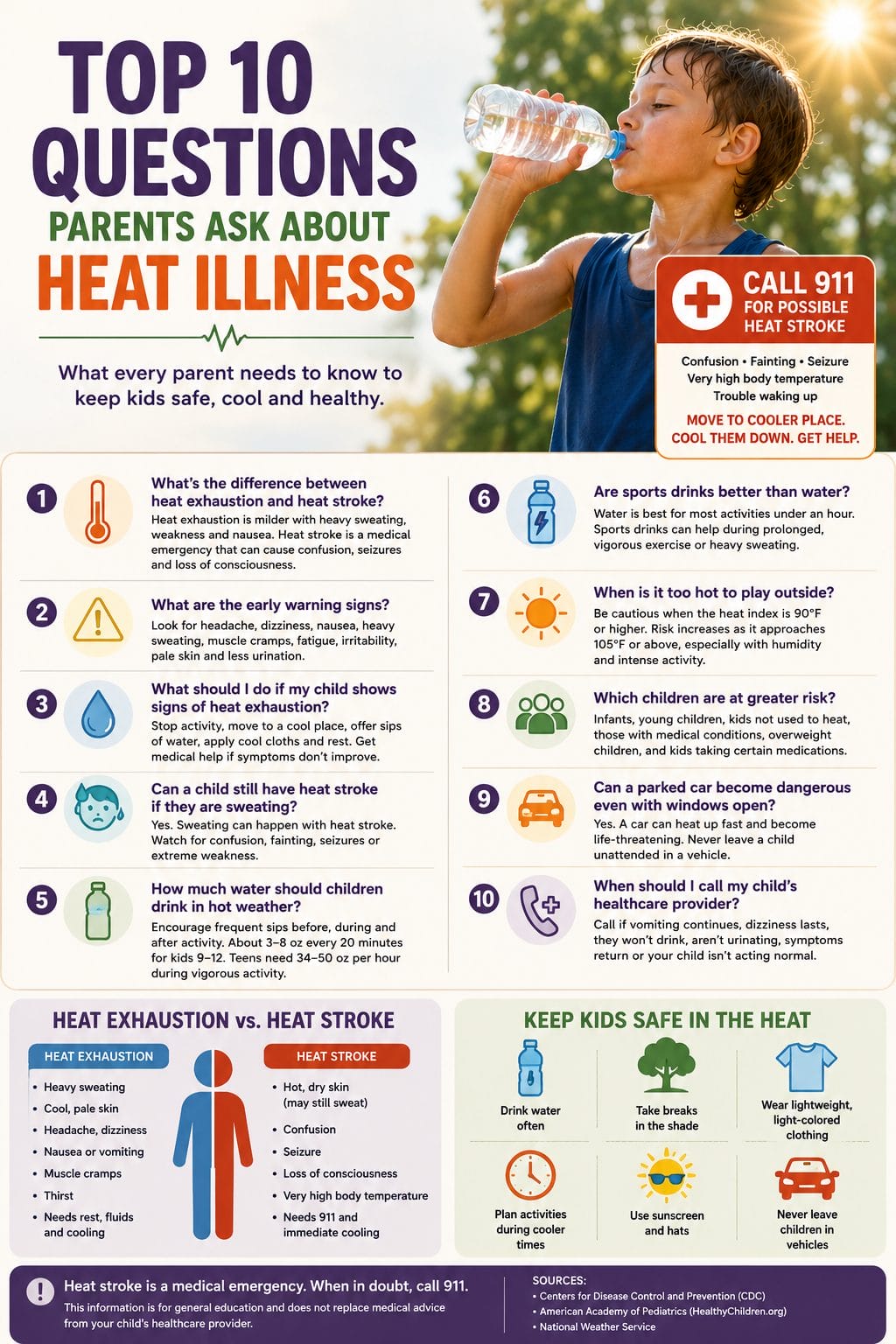
Top 10 Questions Parents Ask About Heat Illness
Hot weather can become dangerous quickly for children, especially infants, young children, athletes and kids spending long periods outside. Children may not recognize the early signs of overheating or remember to stop, drink water and cool down.
Here are answers to ten common questions parents ask about heat exhaustion, heat stroke, hydration and keeping children safe during hot weather.
The Most Important Thing to Know
Heat stroke is a medical emergency. Confusion, fainting, seizures, severe disorientation or difficulty waking a child after heat exposure are reasons to call 911 and begin cooling the child immediately.
1. What Is the Difference Between Heat Exhaustion and Heat Stroke?
Heat exhaustion happens when the body loses too much water and salt, often after heavy sweating. A child may feel weak, dizzy, nauseated, thirsty or unusually tired.
Heat stroke occurs when the body can no longer control its temperature. It can affect the brain and other vital organs and may cause permanent injury or death without immediate treatment.
| Heat Exhaustion | Possible Heat Stroke |
|---|---|
| Heavy sweating | Confusion or altered behavior |
| Cool, pale or clammy skin | Fainting or loss of consciousness |
| Headache or dizziness | Seizure |
| Weakness or fatigue | Very high body temperature |
| Nausea or vomiting | Hot skin that may be dry or sweaty |
| Muscle cramps | Loss of coordination or slurred speech |
2. What Are the Early Warning Signs of Heat Illness?
Children do not always say that they feel overheated. Parents, coaches and caregivers should watch for changes in behavior and physical ability.
- Unusual tiredness or sleepiness
- Headache
- Dizziness or lightheadedness
- Intense thirst
- Muscle cramps
- Nausea or vomiting
- Heavy sweating
- Pale, cool or clammy skin
- Irritability
- Loss of coordination
- Urinating less often than normal
Stop the activity and begin cooling the child as soon as these symptoms appear.
3. What Should I Do If My Child Shows Signs of Heat Exhaustion?
- Stop the activity immediately.
- Move the child into air conditioning, shade or another cool place.
- Remove unnecessary clothing and sports equipment.
- Apply cool, wet cloths or use a cool shower or bath.
- Offer frequent sips of cool water if the child is alert and able to drink safely.
- Do not allow the child to return to activity that day unless a healthcare professional says it is safe.
Seek medical care if symptoms are severe, worsen or do not improve promptly after cooling and hydration.
Call 911 for Possible Heat Stroke
Call 911 immediately if a child becomes confused, collapses, has a seizure, loses consciousness, cannot drink safely or is difficult to wake.
Move the child to a cooler area, remove unnecessary clothing and begin rapid cooling with cool water, wet towels, fans or cold packs while emergency help is on the way. Do not give fluids to a child who is confused, unconscious or unable to swallow safely.
4. Can a Child Still Have Heat Stroke If They Are Sweating?
Yes. Although hot, dry skin is often associated with heat stroke, a person experiencing heat stroke may still be sweating heavily.
Parents should not use sweating alone to decide whether a child is safe. Confusion, fainting, seizures, loss of coordination, altered behavior and a very high body temperature are more concerning signs.
5. How Much Water Should Children Drink in Hot Weather?
Children should drink water before, during and after outdoor activity. They should not wait until they feel thirsty because thirst may occur after dehydration has already started.
During vigorous sports or exercise, the American Academy of Pediatrics offers the following general guidance:
- Children ages 9 to 12: About 3 to 8 ounces of water every 20 minutes.
- Teenagers: About 34 to 50 ounces per hour during vigorous activity.
These are general estimates. A child's needs can vary based on age, size, activity level, temperature, humidity, clothing and medical conditions.
6. Are Sports Drinks Better Than Water?
For most routine outdoor play and activities lasting less than an hour, water is usually the best choice.
An electrolyte drink may be helpful during prolonged, vigorous exercise lasting longer than an hour or when a child has been sweating heavily. Sugary drinks and energy drinks should not replace water.
Children with vomiting, diarrhea, chronic medical conditions or signs of significant dehydration may need individual guidance from a healthcare professional.
7. When Is It Too Hot for Children to Play Outside?
There is no single temperature that is safe for every child. Parents should consider the heat index, humidity, direct sunlight, activity intensity, access to shade and water, clothing and the child's health.
A heat index of 90°F or higher can increase the risk of heat illness, particularly for babies, young children and active children. Risk becomes even greater during strenuous exercise and when the heat index approaches or exceeds 105°F.
On very hot days:
- Schedule outdoor activities during the morning or evening.
- Shorten practices and play sessions.
- Provide frequent water and shade breaks.
- Reduce the intensity of activity.
- Cancel or move activities indoors when conditions become dangerous.
8. Which Children Are at Greater Risk?
Any child can develop heat illness, but some children need additional precautions.
- Infants and very young children
- Children who are not accustomed to hot weather
- Children participating in intense sports or wearing heavy equipment
- Children who are overweight or have obesity
- Children with heart, lung, kidney or other chronic health conditions
- Children who have recently been sick with fever, vomiting or diarrhea
- Children taking medications that may affect hydration, sweating or temperature regulation
- Children without reliable access to air conditioning or cool spaces
Ask your child's healthcare provider whether a medical condition or medication requires special heat precautions.
9. Can a Parked Car Become Dangerous Even With the Windows Open?
Yes. A parked vehicle can become dangerously hot in a short period of time, even when the outside temperature does not feel extreme and even when the windows are cracked.
Never leave a child unattended in a vehicle for any length of time.
Helpful habits include:
- Check the entire vehicle before locking it.
- Place a necessary item, such as your phone, purse or work bag, near the child's car seat.
- Ask your childcare provider to call if your child does not arrive as expected.
- Keep parked vehicles locked so children cannot climb inside.
10. When Should I Call My Child's Healthcare Provider?
Contact your child's healthcare provider if your child develops concerning symptoms after heat exposure, especially when symptoms do not improve promptly after moving to a cool place, resting and drinking fluids.
Call for medical guidance if your child:
- Continues vomiting
- Cannot keep fluids down
- Has persistent dizziness or headache
- Is unusually sleepy or difficult to engage
- Has not urinated for many hours
- Has symptoms that return after initial improvement
- Has an underlying medical condition that increases heat risk
- Is not acting like themselves
Bottom Line for Parents
Encourage children to drink water regularly, take frequent cooling breaks and stop activity at the first sign of illness. Never leave a child in a parked vehicle.
Heat stroke can progress rapidly. When a child has confusion, collapse, a seizure, loss of consciousness or another major change in mental status after heat exposure, call 911 and begin cooling immediately.
Sources and Additional Reading
- American Academy of Pediatrics: Heat-Related Illnesses
- American Academy of Pediatrics: Keeping Active Kids Safe in Hot Weather
- American Academy of Pediatrics: Extreme Heat Safety for Children
- American Academy of Pediatrics: Healthy Hydration
- Centers for Disease Control and Prevention: Heat-Related Illnesses
- National Weather Service: Heat Safety for Kids and Teens
This information is intended for general education and should not replace medical advice from your child's healthcare provider. In an emergency, call 911.