Heat Exhaustion vs. Heat Stroke: Know the Difference
Extreme heat can become dangerous fast, especially for children, older adults, people with chronic health conditions, outdoor workers, athletes, and anyone without reliable air conditioning. Knowing the difference between heat exhaustion and heat stroke can help you act quickly and possibly save a life.
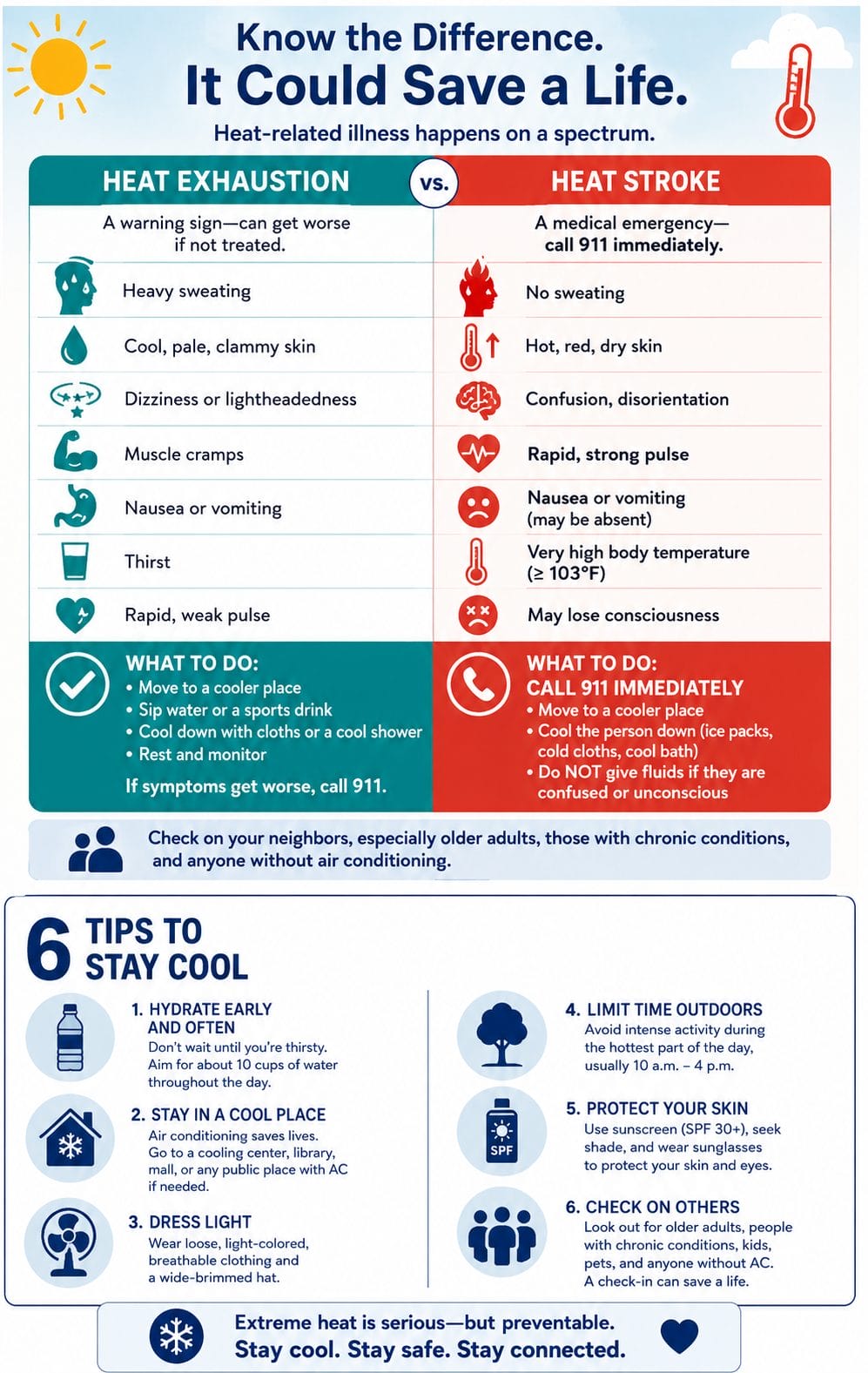
Heat Exhaustion Warning Signs
- Heavy sweating
- Cool, pale, or clammy skin
- Dizziness or lightheadedness
- Muscle cramps
- Nausea or vomiting
- Thirst
- Rapid, weak pulse
What to do: Move to a cooler place, sip water or a sports drink, cool down with wet cloths or a cool shower, and rest. If symptoms get worse, call 911.
Heat Stroke Warning Signs
- Hot, red, or dry skin
- Confusion or disorientation
- Rapid, strong pulse
- Very high body temperature
- Nausea or vomiting
- Loss of consciousness
Heat stroke is a medical emergency. Call 911 immediately. Move the person to a cooler place and begin cooling them down with cold cloths, ice packs, or cool water. Do not give fluids if the person is confused, unconscious, or unable to drink safely.
6 Tips to Stay Cool
- Hydrate early and often. Do not wait until you feel thirsty.
- Stay in a cool place. Use air conditioning when possible or visit a cooling center, library, mall, or public building.
- Dress light. Wear loose, breathable clothing and a wide-brimmed hat outdoors.
- Limit time outside. Avoid strenuous activity during the hottest part of the day.
- Protect your skin. Use sunscreen, seek shade, and wear sunglasses.
- Check on others. Older adults, children, people with chronic conditions, pets, and anyone without air conditioning may need extra help.
Extreme heat is serious, but many heat-related illnesses are preventable. Stay cool, stay hydrated, and check on your neighbors.