
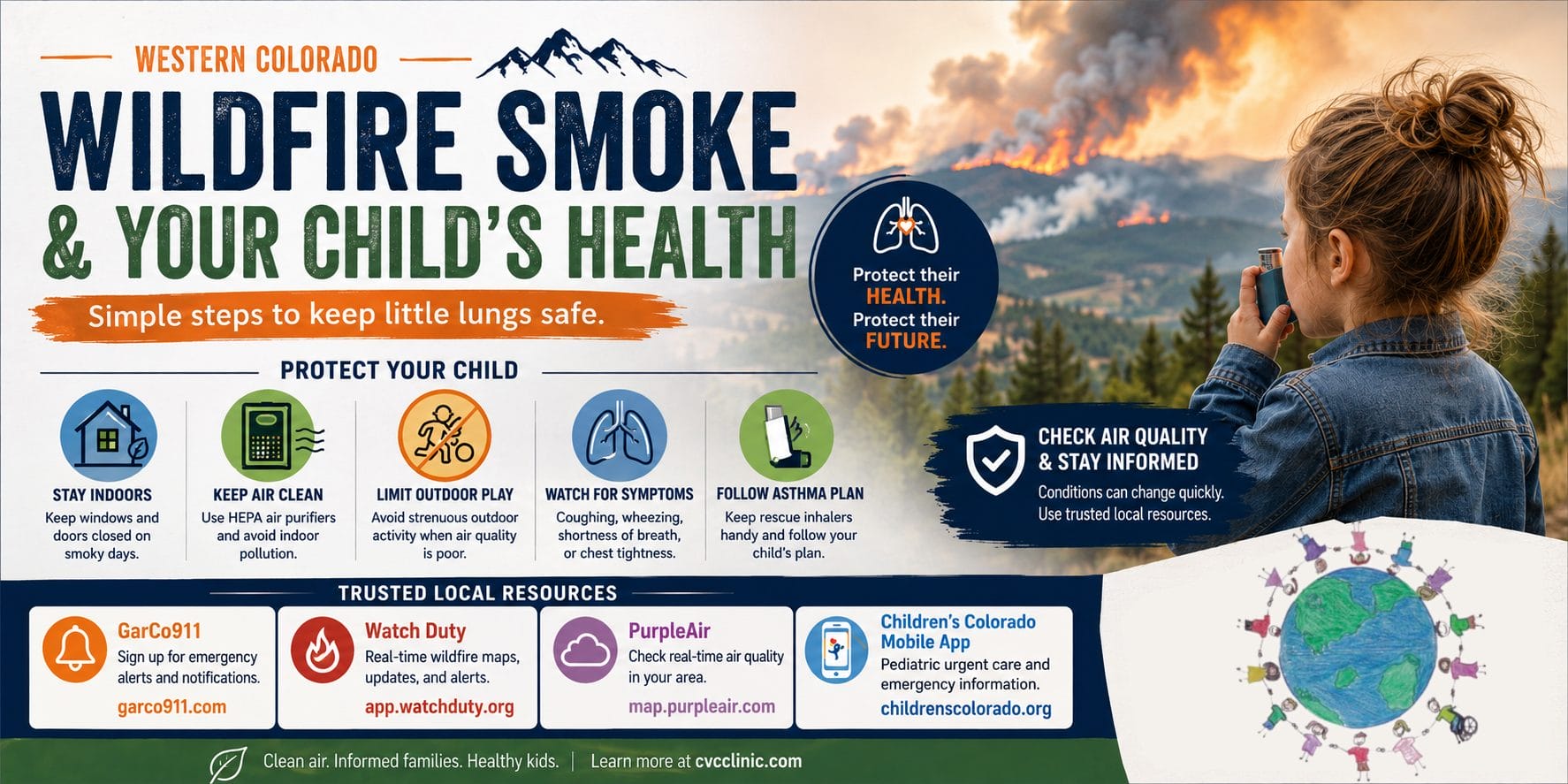
Wildfire Smoke and How to Protect Your Child’s Lungs During Fire Season
Wildfire season can bring smoky skies, poor air quality, and respiratory concerns for families across Western Colorado, including New Castle, Carbondale, Garfield County, and surrounding communities. Even when a fire is not close to your home, smoke can travel long distances and affect children’s breathing, especially on hot, dry, or windy days.
At Castle Valley Children’s Clinic, we want local families to know how wildfire smoke can affect children, when to limit outdoor activity, and where to find reliable emergency and health information.
Why Wildfire Smoke Can Be Harder on Children
Children are not just smaller adults. Their lungs are still developing, and they breathe more air for their body size than adults. That means smoke, ash, and fine particles in the air can irritate their lungs more quickly.
Wildfire smoke may cause symptoms such as:
- Coughing
- Wheezing
- Shortness of breath
- Sore or scratchy throat
- Burning or watery eyes
- Runny nose
- Headaches
- Chest tightness
- Worsening asthma or allergy symptoms
Children with asthma, allergies, chronic lung conditions, heart conditions, or recent respiratory illness may be more sensitive to smoky air.
When Should Kids Stay Indoors?
Smoke conditions can change quickly in Western Colorado. If you can smell smoke, see haze, or notice your child coughing more than usual, it is a good idea to limit outdoor activity.
Families should consider keeping children indoors when:
- The air smells smoky
- Visibility is reduced by haze
- Air quality alerts are issued for your area
- Your child has asthma or breathing problems
- Your child starts coughing, wheezing, or complaining of chest discomfort outside
On smoky days, avoid long periods of outdoor play, sports practices, bike rides, hikes, or strenuous activity. Children breathe faster during exercise, which can pull more smoke particles into their lungs.
How to Keep Indoor Air Cleaner
During smoky conditions, the goal is to reduce your child’s exposure as much as possible.
- Keep windows and doors closed.
- Use air conditioning on recirculate if available.
- Use a portable HEPA air purifier in the room where your child spends the most time.
- Avoid burning candles, incense, or wood fireplaces indoors.
- Avoid vacuuming unless your vacuum has a HEPA filter.
- Do not smoke or vape indoors.
- Change HVAC filters regularly if your home has central air.
If your home becomes too smoky or hot, consider spending time in a cleaner indoor space, such as a library, community building, or another location with filtered air.
Extra Precautions for Children With Asthma
Wildfire smoke can trigger asthma flare-ups. If your child has asthma, make sure you are following their asthma action plan and that rescue medications are available and not expired.
Parents should watch for:
- More frequent coughing
- Wheezing
- Shortness of breath
- Needing a rescue inhaler more often than usual
- Symptoms that wake your child at night
- Difficulty keeping up with normal activity
If your child’s asthma symptoms are getting worse or their medication does not seem to be helping, contact your healthcare provider. You can also visit our pediatric services page to learn more about care available through Castle Valley Children’s Clinic.
When to Seek Medical Care
Call your child’s healthcare provider if your child has persistent coughing, wheezing, chest tightness, shortness of breath, or worsening asthma symptoms.
Seek emergency care right away if your child:
- Is struggling to breathe
- Has blue lips or face
- Cannot speak in full sentences
- Has ribs pulling in while breathing
- Seems confused, extremely sleepy, or unusually weak
- Has symptoms that are not improving with prescribed rescue medication
For appointments or questions, visit our contact page. Castle Valley Children’s Clinic serves families from our New Castle and Carbondale locations.
Trusted Local Fire and Safety Resources
During wildfire season, it is important to use reliable sources for evacuation notices, emergency alerts, fire maps, and health information. Social media rumors can spread quickly, so always confirm important safety information with official resources.
Garfield County Emergency Alerts
Garfield County emergency notifications can help families stay informed about fires, evacuations, road closures, severe weather, and other urgent public safety updates.
Visit GarCo911 for local emergency alert information.
Watch Duty Wildfire Updates
Watch Duty is a useful tool for tracking nearby wildfires, fire perimeters, evacuation areas, and incident updates. It can help families understand what is happening around them as conditions change.
View current wildfire information on Watch Duty.
Children’s Hospital Colorado Mobile App
The Children’s Hospital Colorado mobile app gives families access to pediatric urgent care and emergency care information. This can be helpful when you are deciding where to go or what level of care your child may need.
Learn more about the Children’s Hospital Colorado mobile app.
PurpleAir Air Quality Map
The PurpleAir air quality map gives families access to real-time air quality readings in their area. This can be helpful when deciding whether it is safe for children to play outside, attend outdoor activities, or if it is better to stay indoors during smoky conditions.
Check real-time air quality with PurpleAir.
Simple Steps Can Help Protect Little Lungs
Wildfire smoke can be stressful for families, especially when children already have asthma, allergies, or breathing concerns. The good news is that small steps can make a big difference. Check local fire and air quality updates, keep indoor air as clean as possible, limit outdoor activity when smoke is present, and watch your child closely for symptoms.
Castle Valley Children’s Clinic is here to support families in New Castle, Carbondale, and the surrounding Western Colorado communities. If your child is having respiratory symptoms or you are concerned about smoke exposure, please contact our clinic or review our patient resources before your visit.